
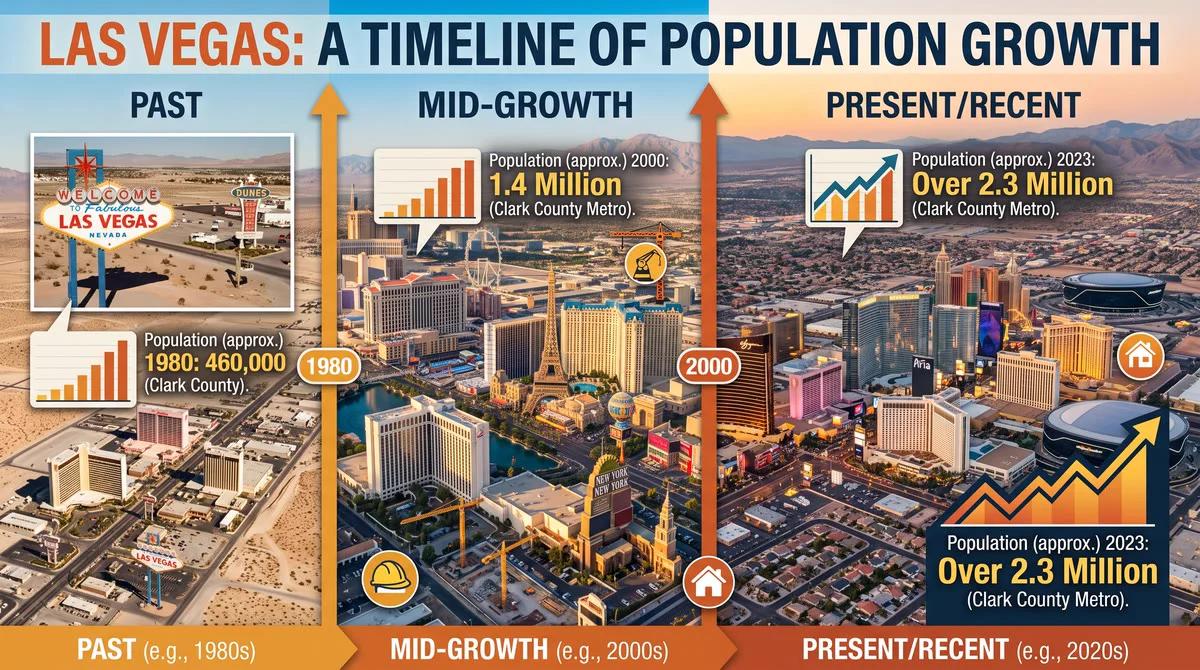
Clark County is still expected to keep growing, but the path to 3 million residents now appears longer. UNLV’s Center for Business and Economic Research projects the county will reach that milestone about 10 years later than previously expected, reflecting a slower population growth outlook for the Las Vegas area.
What Happened
UNLV’s Center for Business and Economic Research now expects Clark County’s population growth to cool enough that the county will hit 3 million residents roughly 10 years later than earlier projections had indicated.
Key Numbers
The main number released is the delay: about a decade. The source report cited in the story does not include a specific new target year for reaching 3 million residents, nor does it provide a current population estimate in the available details.
Why the Forecast Changed
The forecast points to slower growth, but the available information does not identify the drivers behind the slowdown. No specific causes — such as housing costs, migration patterns, employment trends or birth rates — were detailed in the source material provided.
What It Means for Clark County
A later 3 million-resident milestone could affect how local governments, businesses and developers think about long-term planning, including demand for housing, roads, schools, health care and public services. The projection does not mean Clark County is expected to stop growing; it means the pace is now expected to be slower than previously thought.
Source of the Projection
The projection comes from UNLV’s Center for Business and Economic Research, a local source often cited for Southern Nevada economic and demographic analysis.
Key Facts
- Clark County is projected to reach 3 million residents about 10 years later than previously expected.
- UNLV's Center for Business and Economic Research says population growth in the county is expected to slow.