Hidden Valley Trail: What to Know Before You Go
Hidden Valley Trail — officially BLM Trail 300 — offers a genuinely quieter, more backcountry approach into Sloan Canyon's petroglyph gallery, starting from a separate trailhead near Jean rather than the main Henderson-side entrance. The route sits on the edge of the North McCullough Wilderness Area, where mechanized use is legally prohibited, making this a real hiking-only trail rather than shared-use terrain. Welcome to Hidden Valley Trail, a solid alternative for visitors who want Sloan Canyon's rock art without the more heavily-trafficked main approach.
Trail Snapshot
Distance | Approximately 6.4 miles round trip to Petroglyph Canyon and back (a longer 11-mile combined route exists tying in the main Petroglyph Canyon Trail)
Elevation | Ranges from about 3,146 to 3,702 ft (~466 ft gain to the high saddle)
Difficulty | Moderate
Hike Time | 3 to 4 hours
Fee | None
Restrooms | None confirmed at the trailhead
Pets | Not confirmed for this trailhead; dogs are prohibited once you reach the Petroglyph Canyon core area
Elevation | Ranges from about 3,146 to 3,702 ft (~466 ft gain to the high saddle)
Difficulty | Moderate
Hike Time | 3 to 4 hours
Fee | None
Restrooms | None confirmed at the trailhead
Pets | Not confirmed for this trailhead; dogs are prohibited once you reach the Petroglyph Canyon core area
How to Reach the Trailhead
From I-15 south, take the Sloan exit, head east under the freeway to Las Vegas Boulevard, continue south about 6.3 miles, turn left onto Southern Nevada Liteweight Road for 4.4 miles, then left onto the narrow dirt Hidden Valley Road for about 5 miles, following carsonite trail markers. A 2WD high-clearance vehicle is recommended for the access road except in the best conditions. No fee to hike here.
What to Expect on the Trail
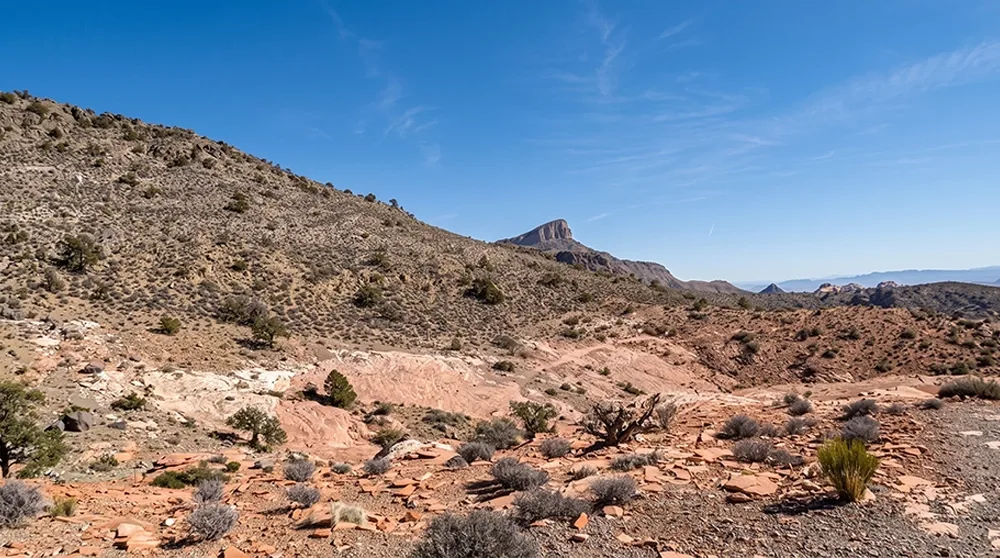
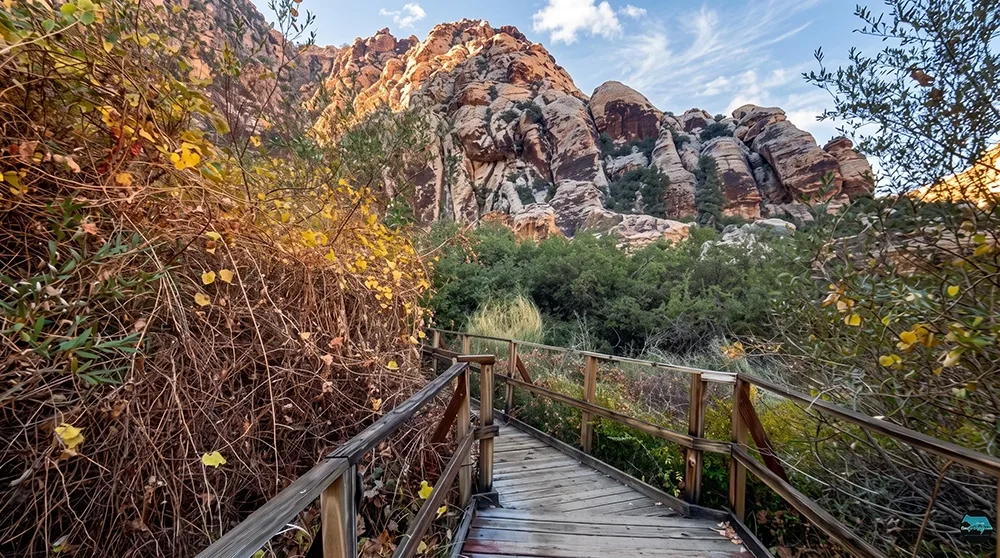
A well-constructed, easy-to-follow trail with one turn that's easy to miss, marked by a cairn. The route climbs to a saddle before descending through hillsides and washes toward Petroglyph Canyon, connecting to both the main Petroglyph Trail and the Cowboy Trail bypass. This is a genuinely more remote trailhead than Sloan Canyon's main Henderson-side access — the unpaved access road itself requires a capable vehicle, and cell service is unreliable.
A Quieter Way Into the Petroglyph Gallery
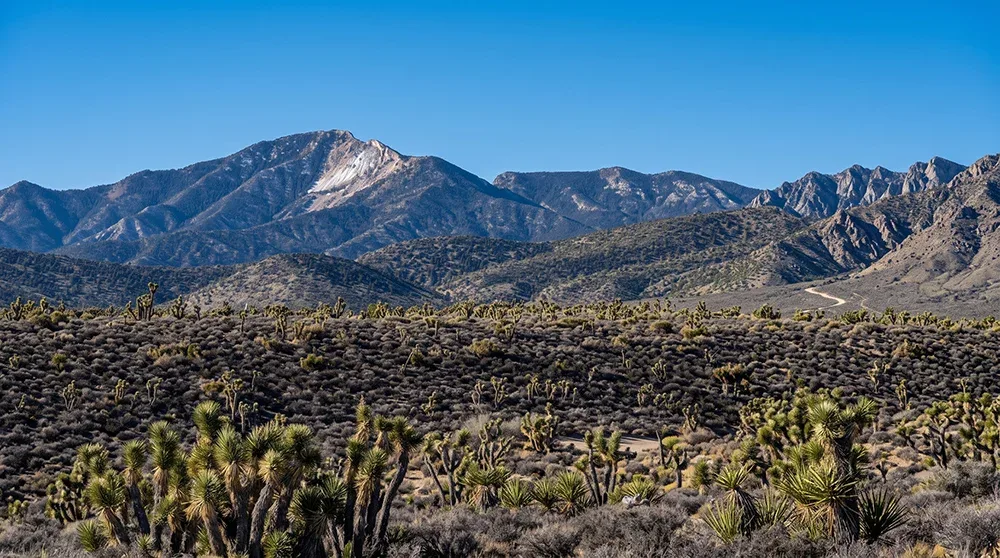
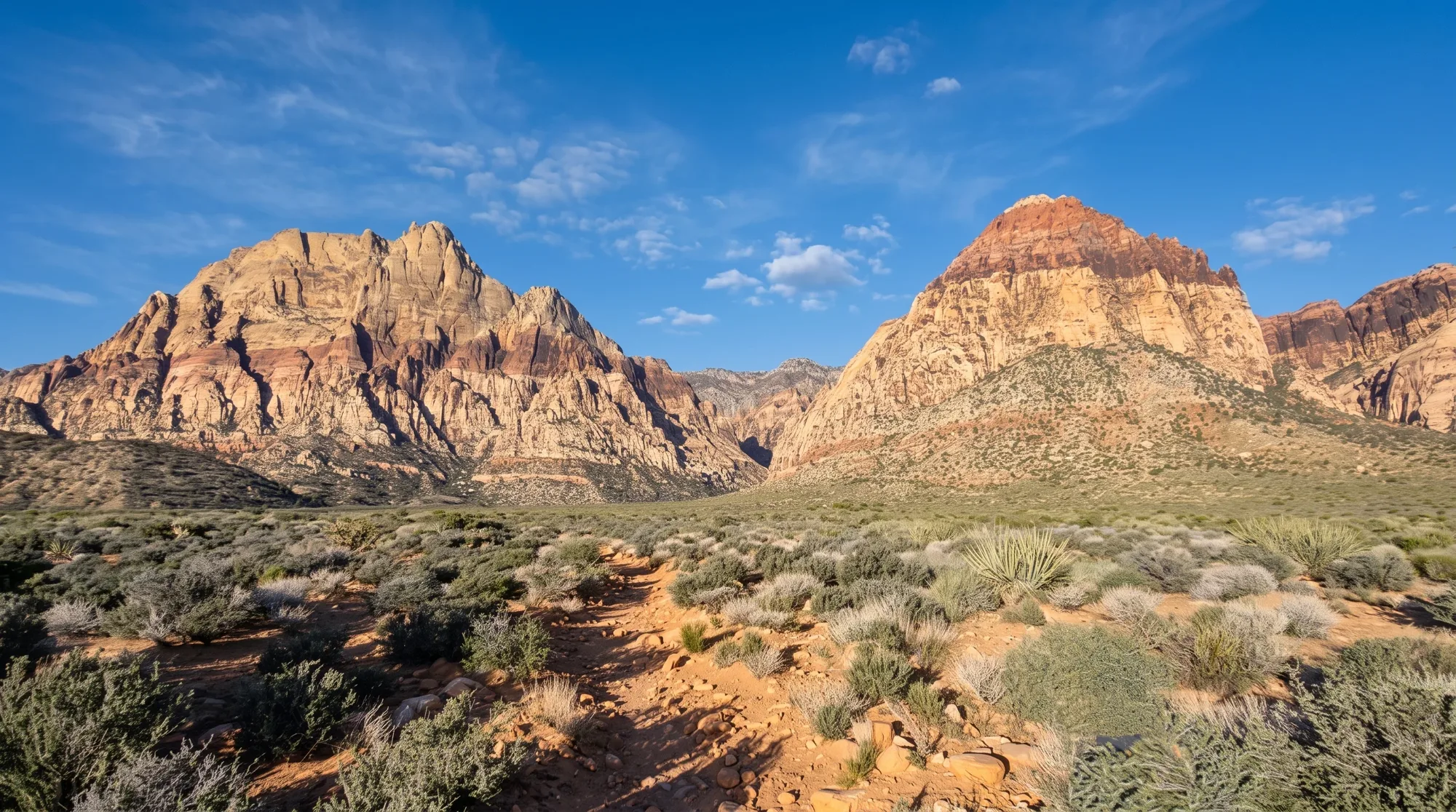
Volcanic geology — breccia, dikes, and weathering features — lines the route, along with seasonal wildflowers (Mojave yucca blooms late March through May) and mountain-crest views from the initial saddle before descending toward the petroglyph gallery. This trail is the western approach to the same rock art site documented in LvLocal's Petroglyph Canyon Trail guide — more than 300 panels and roughly 1,700 individual design elements are found once you connect into that core area.
Best Time to Visit and Conditions
October through April is the reliable window given the exposed desert terrain and flash-flood-prone washes.
Practical Advice for New Visitors
- Bring at least 3 liters of water per person given the distance and remoteness.
- Use a high-clearance vehicle for the unpaved access road.
- Download an offline map — watch for the one easily-missed cairn-marked turn.
- Check the weather forecast given flash-flood-prone washes.
- This is a genuinely quieter alternative to Sloan Canyon's main Henderson-side entrance.
- Tell someone your plans given the remote setting.
- Connects to both the main Petroglyph Canyon Trail and the Cowboy Trail bypass once you reach the core area.
- Confirm current pet rules before bringing a dog into the petroglyph core area.
For hikers who want a quieter, more backcountry way into Sloan Canyon's rock art — and don't mind a rougher access road — Hidden Valley Trail is a genuinely worthwhile alternative to the busier main entrance.