Historic Railroad Trail: What to Know Before You Go
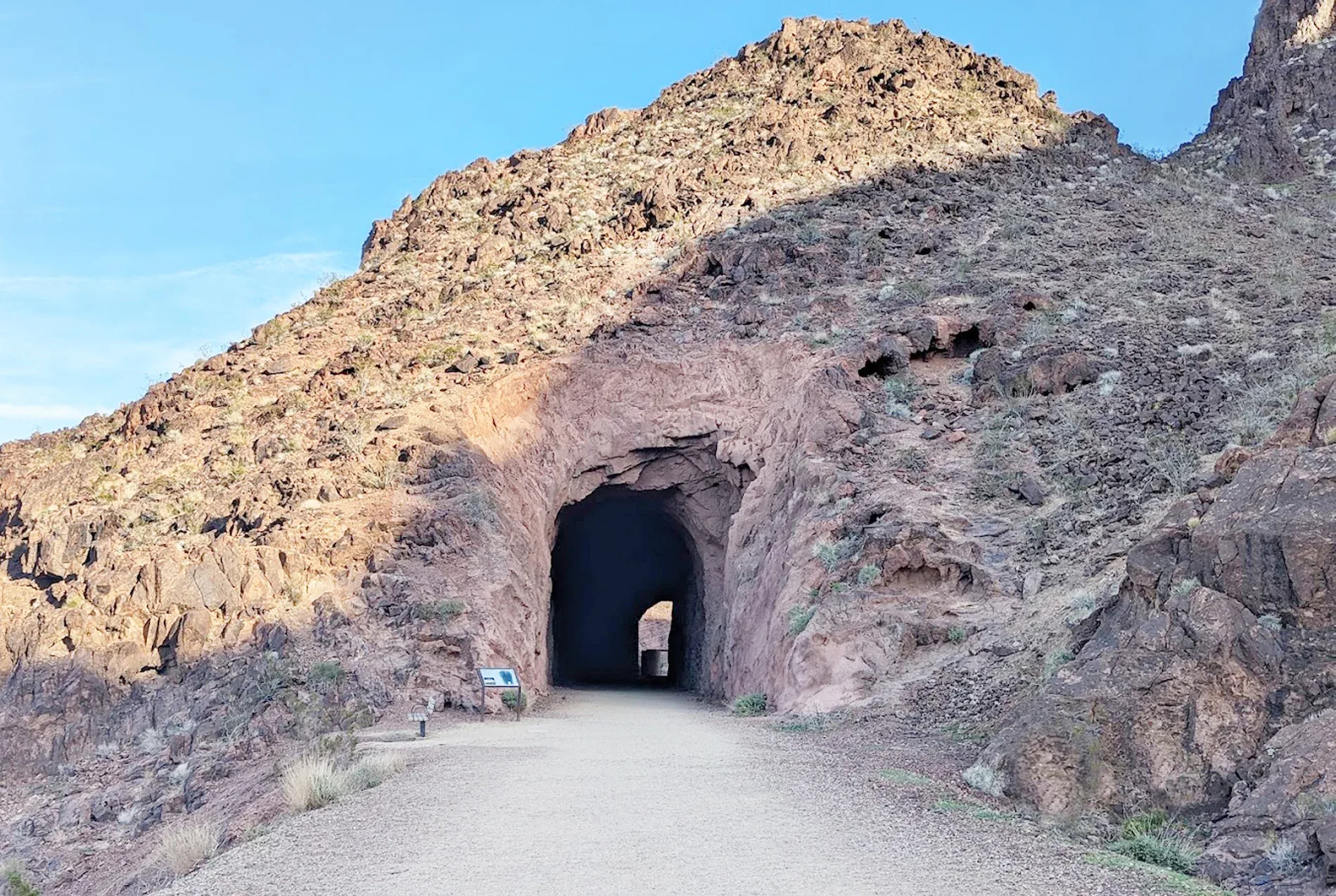
Most trails ask you to imagine the history behind them. This one hands it to you directly — five tunnels blasted through solid volcanic rock in 1931, wide enough to have once hauled the literal materials that built Hoover Dam. Walk through them today and the temperature drops, the light dims, and for a few hundred feet you're standing exactly where flatbed rail cars once rumbled past carrying steel and concrete toward one of the largest engineering projects in American history. Welcome to Lake Mead National Recreation Area. If this is your first visit and the Historic Railroad Trail is on your itinerary, this guide will help you experience one of the park's most distinctive and accessible routes — one that combines desert scenery with tangible links to Hoover Dam construction history.
Trail Snapshot
Distance | 3.7 miles one-way / 7.4 miles round trip
Elevation Gain | Approximately 200–300 ft over the full length
Hike Time | Around 4 hours for the full out-and-back
Difficulty | Easy
Fee | Free
Surface | Compacted gravel, gentle grades throughout
Tunnels | Five, each approximately 25 ft wide and 300 ft long
Restrooms | Available at the trailhead
Pets | Allowed
Accessibility | Wheelchair accessible; stroller-friendly but bumpy in spots
Trailhead and Access
The trail connects directly with facilities near Hoover Dam, with its main developed trailhead just north of the Alan Bible Visitor Center off Lakeshore Road. The trailhead has a large paved lot right off the highway — no four-wheel-drive or high-clearance vehicle needed — plus restrooms and posted interpretive signage covering the railroad's original purpose hauling material for Hoover Dam. Parking and access points are also located in the vicinity of the dam visitor area on the far end of the route. Confirm current road and trailhead conditions before departure, as access can vary with seasonal or operational changes.
What to Expect on the Trail
The path follows the historic rail corridor, offering steady, moderate walking with minimal elevation change — a former railroad grade means the whole route stays under a few percent grade the entire way, and most hikers won't notice the climb at all. The five tunnels are the signature feature. Inside each one the temperature drops noticeably and the light dims, providing genuine relief from the desert sun. Headlamps or flashlights are recommended for safer passage through the longer sections, and kids in particular tend to love this part — cool, dark, and just spooky enough to be fun.
Between tunnels the trail opens to views of Lake Mead and the surrounding desert terrain; the overlook just past the third tunnel offers the best unobstructed view of the lake on the entire route, and it's worth planning a short break there. A few side spurs branch off toward quiet overlooks that most hikers skip entirely, which can be worth exploring if you have the extra time and energy. In places, concrete plugs and other remnants from the original dam construction remain visible in nearby ravines, offering a direct visual connection to the 1930s engineering effort that moved millions of tons of material along this exact route.
The surface remains firm and relatively even throughout, making the trail family-friendly and largely accessible, and cell signal holds up for most of its length — a rarity for a trail this remote. Interpretive elements along the way help place the railroad's role in Hoover Dam construction into context. If you're bringing a camera, the tunnel entrances frame Lake Mead well for a classic silhouette shot, especially around midday when the light inside the tunnel contrasts most sharply with the bright lake beyond.
A Trail Built for a Dam
This corridor wasn't built for hikers — it was built in 1931 for the Six Companies consortium constructing Hoover Dam, as a spur line off the main Union Pacific railroad. For roughly three decades, flatbed cars loaded with steel, concrete aggregate, and construction equipment rumbled through these same five tunnels, blasted directly through volcanic rock to keep the grade gentle enough for heavy freight. Once the dam was complete and the tracks were no longer needed, the rails themselves were eventually pulled up and sold for scrap, leaving behind the graded bed, the tunnels, and scattered construction remnants that hikers walk past today. It's a rare case of a National Recreation Trail that used to be industrial infrastructure first and a hiking destination second — which is part of what makes the tunnels feel less like a novelty and more like a genuine piece of the dam's construction story.
Best Time to Visit and Conditions
The trail is open year-round — unlike several nearby Lake Mead trails that close seasonally for extreme heat, the Historic Railroad Trail stays open through the summer. That said, desert heat can be intense from late spring through early fall, and the National Park Service specifically recommends hiking only in the early morning during summer and being back at your car before 10 a.m. Early morning or late afternoon starts are advisable during warmer months generally. The tunnels provide natural shade and noticeably cooler temperatures at any time of day, which makes them a welcome break even on a hot hike. Winter and early spring generally offer the most comfortable hiking conditions, and February and March can bring desert wildflowers along parts of the route. Always check current weather and lake levels before your visit.
Practical Advice for New Visitors
- Carry sufficient water — at least one liter per person as a baseline, more in warm weather — since the route is largely exposed outside the tunnels.
- Bring a headlamp or flashlight for the tunnels, especially if hiking near dusk.
- Wear sturdy, comfortable shoes suitable for gravel surfaces.
- Sun protection (hat, sunscreen, sunglasses) is essential; shade is minimal outside the tunnels themselves.
- The trail is wheelchair accessible and stroller-friendly, but expect some bumpy sections — confirm current surface and access conditions if mobility devices will be used.
- If hiking with kids, pack a small flashlight just for them, along with extra snacks and water.
- Stay on the established path and respect all posted signs and barriers.
- Plan to refuel afterward in Boulder City — Boulder Dam Brewing Co. downtown is about five minutes from the trailhead and a popular post-hike stop.
The Historic Railroad Trail offers a rare combination of accessible walking, dramatic tunnel passages, and direct ties to one of the nation's major engineering projects. With basic preparation and attention to desert conditions, first-time visitors can enjoy a memorable and educational outing along this historic corridor. Travel safely, stay on the trail, and leave no trace.