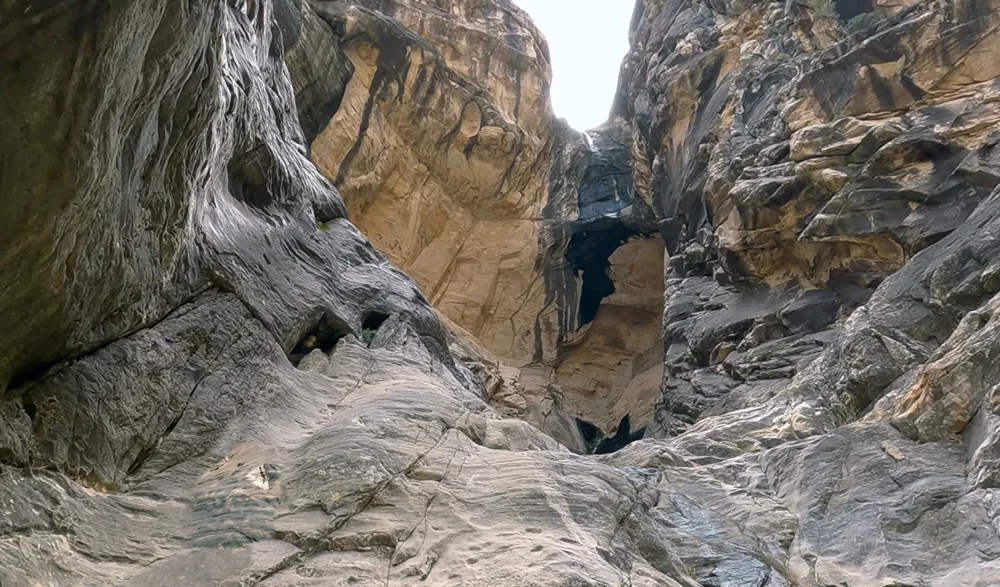
Ice Box Canyon Trail: What to Know Before You Go
Step past the canyon's mouth and the temperature drops before you've even noticed you're still walking through the same desert. Ice Box Canyon earns its name honestly — a narrow, boulder-choked slot where minimal direct sunlight and cool air draining down from the surrounding peaks combine into a genuine microclimate, several degrees cooler than the open scrubland just behind you. The trail runs 2.5 miles round trip to its official end, though most hikers push further into a boulder scramble toward an upper pool that can stretch the outing closer to 3 miles. From December through April, seasonal waterfalls trickle down the canyon walls, adding a sound and a sight you won't find anywhere else in Red Rock Canyon. Welcome to Ice Box Canyon, one of Red Rock Canyon National Conservation Area's most distinctive short hikes.
Trail Snapshot
Distance | 2.5 miles round trip to the official trail end (closer to 3 miles with the boulder scramble to the upper pool)
Difficulty | Moderately strenuous
Hike Time | 2 to 3 hours
Fee | $20 per vehicle (Red Rock Canyon entrance fee)
Reservation | Required for Scenic Drive entry Oct 1 – May 31, 8am to 5pm (free, via recreation.gov); not required June 1 – Sep 30, or outside those hours any time of year
Scenic Drive Hours | Opens 6am daily; closes 5pm (Nov–Feb), 7pm (Mar & Oct), 8pm (Apr–Sep)
Restrooms | None at the trailhead — nearest at the Visitor Center
Pets | Allowed, must be leashed
Accessibility | Not wheelchair or stroller friendly
How to Reach the Trailhead
Ice Box Canyon's trailhead sits along Red Rock Canyon Scenic Drive, the 13-mile one-way loop through the park. If you're visiting between October 1 and May 31, you'll need a timed-entry reservation to drive the Scenic Drive between 8am and 5pm — reserve online at recreation.gov before you go. There's no fee for the reservation itself, but it is required during those months and hours. From June through September, or outside the reserved hours any time of year, no reservation is needed — just the standard $20 per-vehicle entrance fee.
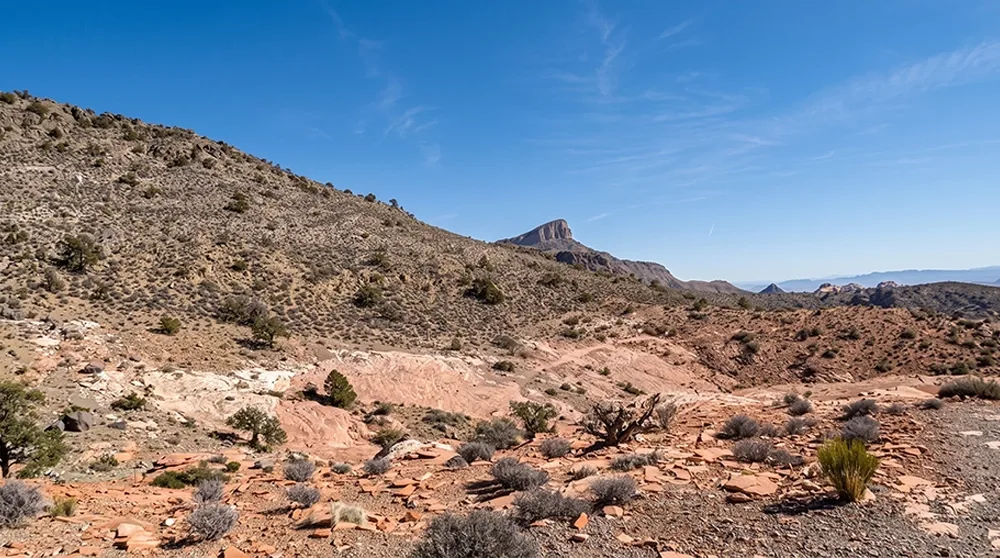
From the trailhead pullout, the route starts across open desert before narrowing into the canyon proper. There's no restroom at the trailhead itself — use the facilities at the Visitor Center near the park entrance before you set out — and cell service becomes unreliable once you're inside the canyon walls.
What to Expect on the Trail
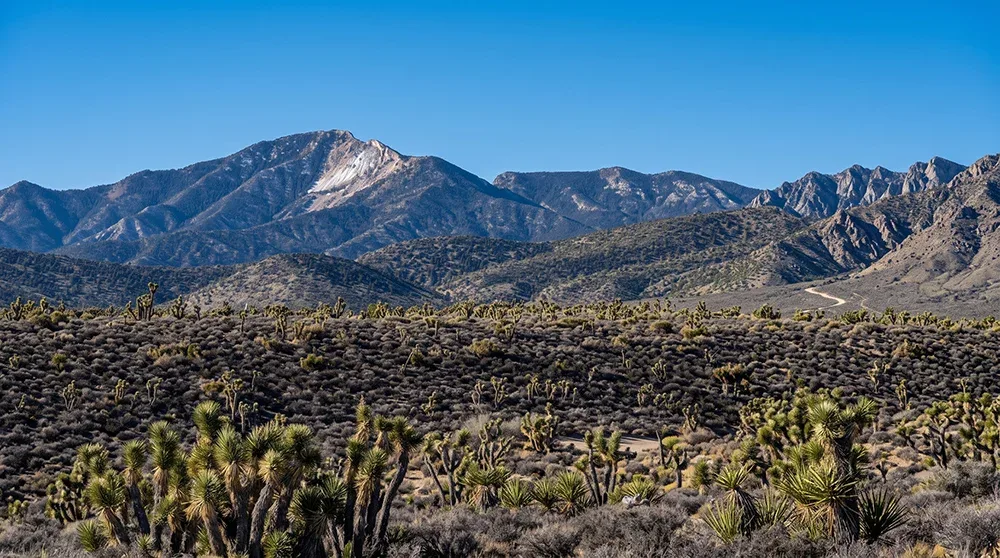
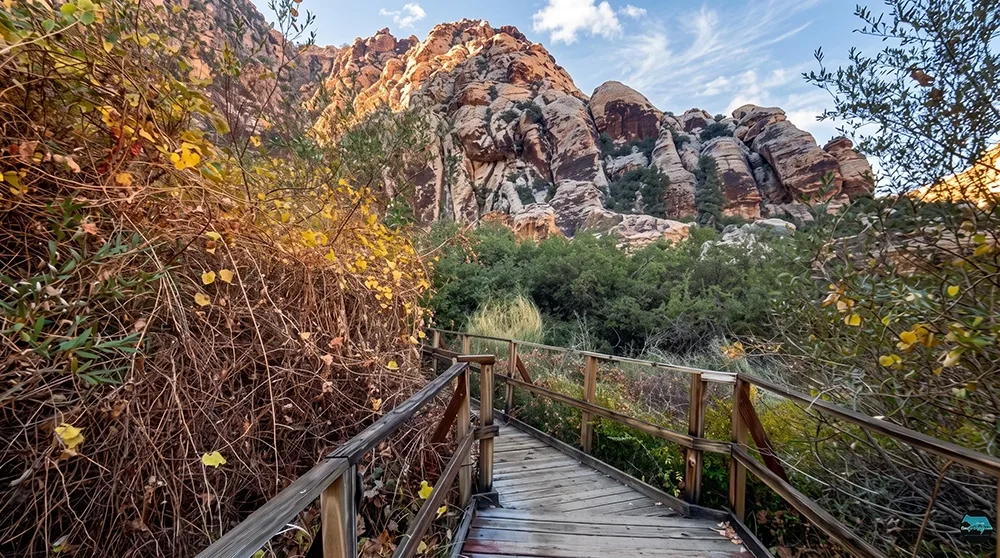
The first stretch is straightforward walking across open desert scrub, giving little hint of what's ahead. As you approach the canyon mouth, the terrain shifts — sandstone walls rise on either side, and the temperature noticeably drops. Continue following the wash into the canyon, where the trail becomes rockier and progressively more technical.
Near the 2.5-mile mark, most hikers reach the canyon's official trail end. From here, reaching the upper pool requires a boulder scramble — hands-on, over large sandstone blocks — that isn't difficult in a technical sense but does require confidence on uneven terrain. Between December and April, this final stretch often rewards the effort with seasonal waterfalls spilling down the canyon walls into pools below; outside that window, expect dry rock instead.
Why Ice Box Canyon Stays Cool
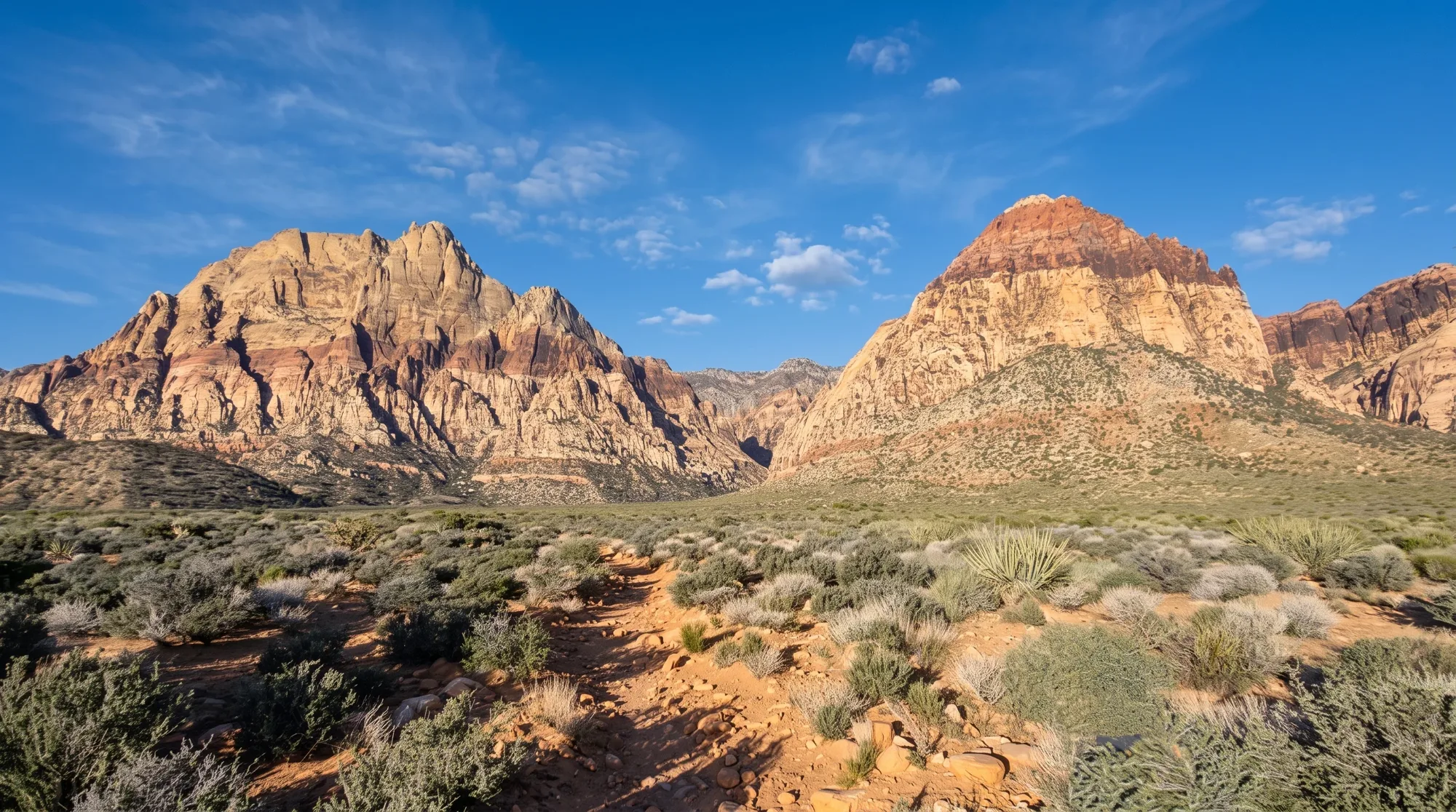
Unlike most of Red Rock Canyon's exposed, sun-baked trails, Ice Box Canyon benefits from a real microclimate. The canyon's narrow, deep walls block much of the direct sunlight that bakes the surrounding desert, while cool air draining down from the higher elevations settles into the canyon floor. The result is a noticeable temperature drop as you walk deeper in — genuinely cooler, not just shadier. It's the same Aztec sandstone that defines the rest of Red Rock Canyon, formed from ancient wind-blown sand dunes roughly 180 million years ago, but here the canyon's shape does as much work as the rock itself.
Best Time to Visit and Conditions
December through April is the prime window, both for comfortable hiking temperatures and for the best chance at seasonal waterfalls in the upper canyon. Summer heat makes this trail uncomfortable and genuinely risky by midday, even with the canyon's cooling effect, so an early morning start is essential if you're hiking between May and September.
Weekday mornings tend to be quieter than weekends, and Scenic Drive reservations (required October through May) can fill up during peak season, so plan a few days ahead rather than showing up and hoping for a same-day slot.
Practical Advice for New Visitors
- Reserve your Scenic Drive time slot at recreation.gov in advance if visiting between October and May.
- Bring at least 2 liters of water per person, more in warmer months.
- Wear shoes with real traction for the boulder scramble near the canyon's end.
- Pack a light layer — the canyon runs noticeably cooler than the trailhead.
- Check recent precipitation if you're hoping to see the seasonal waterfalls (December–April).
- Cell service is unreliable inside the canyon — download offline maps beforehand.
- There's no restroom at the trailhead; use the Visitor Center facilities first.
- Turn around at the official 2.5-mile trail end if you're not comfortable scrambling over boulders.
Ice Box Canyon delivers something few other Red Rock Canyon trails can: a genuine break from the desert heat, tucked inside sandstone walls that feel like a different world from the open scrubland just outside. Stick to the marked route, respect the reservation system during peak season, and pack out everything you bring in — this canyon's cool microclimate is worth protecting for the next hiker who needs it just as much as you do.