Mouse's Tank Trail: What to Know Before You Go
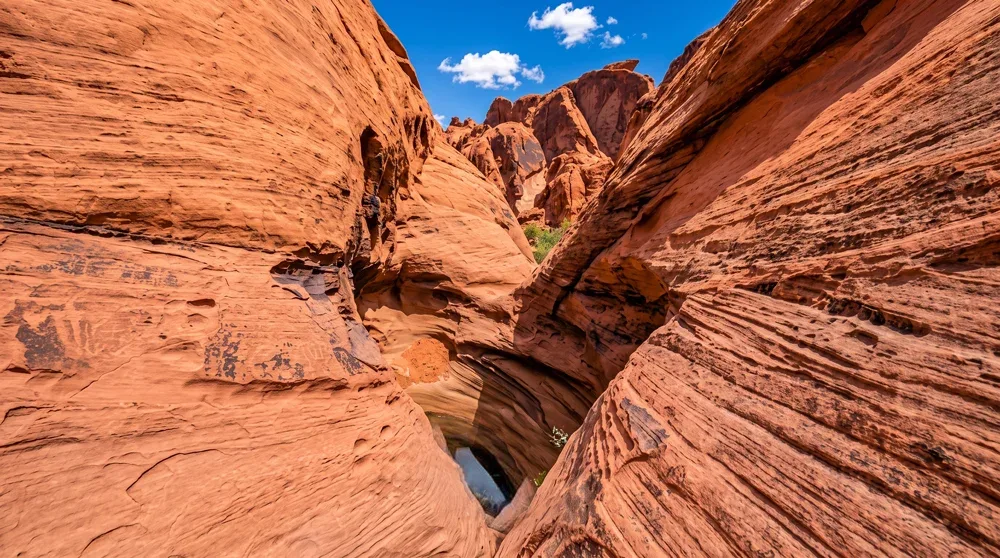
By July, most of Valley of Fire's best-known trails are closed for the season — Fire Wave, White Domes, and half a dozen others shut down every year from mid-May through September for hiker safety. Mouse's Tank stays open. The walk is short, flat, and sandy, cutting through a narrow wash lined with red Aztec sandstone, past petroglyph panels left by Basketmaker and Ancestral Puebloan peoples, to a natural rock basin that collects rainwater year-round. The basin is named for a 19th-century Southern Paiute man who used it as a hideout. Welcome to Mouse's Tank, one of the easiest and most reliably open trails in the entire park.
Trail Snapshot
Distance | Approximately 0.5–0.75 miles round trip
Difficulty | Easy
Hike Time | 30 to 45 minutes
Fee | $10 per vehicle (Nevada plates), $15 per vehicle (non-Nevada), $2 per person on foot or bike
Hours | Sunrise to sunset, 365 days a year
Trail Status | Not subject to Valley of Fire's May 15–Sep 30 seasonal trail closures
Restrooms | Yes, at the trailhead
Pets | Allowed, must be leashed
How to Reach the Trailhead
The Mouse's Tank / Petroglyph Canyon trailhead sits right on Mouse's Tank Road inside Valley of Fire State Park, and it doubles as a shaded day-use picnic area with restrooms — one of the more developed stops in the park. The standard Nevada State Parks entrance fee applies: $10 per vehicle with Nevada plates, $15 for out-of-state vehicles, or $2 per person if arriving on foot or bike. Unlike Fire Wave, White Domes, and several other Valley of Fire trails, Mouse's Tank is not included in the park's annual May 15 through September 30 seasonal closures, making it one of the only real hiking options here in the height of summer.
What to Expect on the Trail
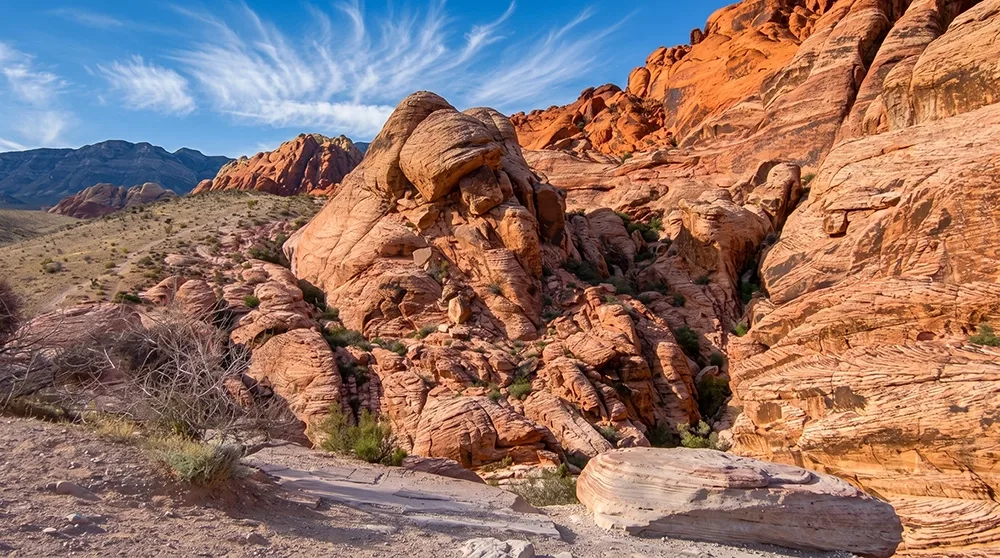
The trail follows a flat, sandy wash between red and white sandstone walls, with petroglyph panels appearing on both sides at intervals along the way — easy to walk past if you're focused on reaching the tank at the end. The path is wide and easy to navigate the entire way, with no scrambling or elevation gain to speak of. At the trail's end, Mouse's Tank itself is a natural depression in the rock that collects and holds rainwater, sometimes for months at a time.
Petroglyphs and a Fugitive's Hideout
The petroglyphs lining this canyon were created by Basketmaker and Ancestral Puebloan peoples; as with any rock art site, look without touching, since skin oils damage the desert varnish these images are carved into. The trail's name comes from "Little Mouse," a Southern Paiute man who used the rock basin at the trail's end as a hideout in the 1890s after being accused of killing two prospectors. He was tracked down and killed by a posse near Muddy Spring in July 1897, and the basin has carried his name ever since.
Best Time to Visit and Conditions
This is one of the few Valley of Fire trails worth attempting in summer, since it isn't part of the park's seasonal closures — but an early morning visit is still strongly recommended given the full sun exposure and short but real heat risk. Any season works well otherwise, and the short distance makes this an easy add-on to a longer day exploring the rest of the park.
Practical Advice for New Visitors
- Visit early in the morning if you're here in summer — there's no shade on the trail itself.
- Bring at least 1 liter of water per person even though the distance is short.
- Watch for petroglyph panels on both canyon walls, not just near the tank.
- Never touch the rock art.
- Bring cash or a card for the park entrance fee.
- Use the restrooms at the trailhead before you start — none are available along the trail.
- Leash your dog for the full route.
- Pair this with a longer trail elsewhere in the park, since this one takes well under an hour.
Mouse's Tank proves that a short, easy trail can still deliver real cultural history — and its year-round accessibility makes it one of the most dependable stops in Valley of Fire, especially when the park's harder trails are closed for the season. Stay on the path, leave the petroglyphs untouched, and take advantage of one of the few Valley of Fire hikes you can do any month of the year.