White Owl Canyon: What to Know Before You Go
White Owl Canyon earns its name honestly — real white barn owls nest in the canyon walls, and hikers can spot whitewash, nests, and pellets along the way. Two access points lead into this slot canyon system near Boulder City, with distance ranging from about 2.2 to 4 miles depending on the route and how far you extend it. Expect serpentine canyon walls, real scrambling sections including 8 to 10-foot rock-wall descents, and Lake Mead views along the canyon edge. Welcome to White Owl Canyon, one of the more genuinely wild-feeling short hikes near Boulder City.
Trail Snapshot
Distance | Roughly 2.2 to 4 miles depending on route and access point
Elevation | ~252 ft gain (via the 33 Hole Overlook access)
Difficulty | Moderate (with real scrambling sections)
Hike Time | 2 to 3 hours
Fee | $25 per vehicle (1-7 day pass), $15 per person pedestrian/cyclist, $45 annual pass — cashless, card only
Restrooms | Yes, vault toilet at the 33 Hole Overlook trailhead
Pets | Allowed, must be leashed (6 ft max); some scramble sections may be difficult for dogs
How to Reach the Trailhead
The main access point is 33 Hole Overlook in Boulder City, with a large paved lot and a vault toilet on site. A second access point, marked by an "Owl Canyon" sign with a kiosk and picnic tables, offers a different route into the same general canyon system. Lake Mead National Recreation Area's entrance fee ($25/vehicle) applies. This trail is genuinely distinct from LvLocal's Historic Railroad Trail guide, which starts near the Alan Bible Visitor Center and ends at Hoover Dam — a different area entirely.
What to Expect on the Trail
This route includes real scrambling, not just uneven footing — 8 to 10-foot rock-wall descents in the slot canyon sections, difficult enough that dogs may struggle with parts of it. A longer variant can extend to about 4 miles via culverts connecting to the River Mountains Loop Trail and Shoreline Trail, with a Class 3 scramble near the final culvert. Flash flood risk exists in the slot canyon sections — check weather before entering. This is an unmaintained trail with no cell service; download offline maps beforehand. Terrain near the final culvert on the longer route changed after 2021 flash flooding, so current conditions there may differ from older trip reports.
Real Owls, Real Nests
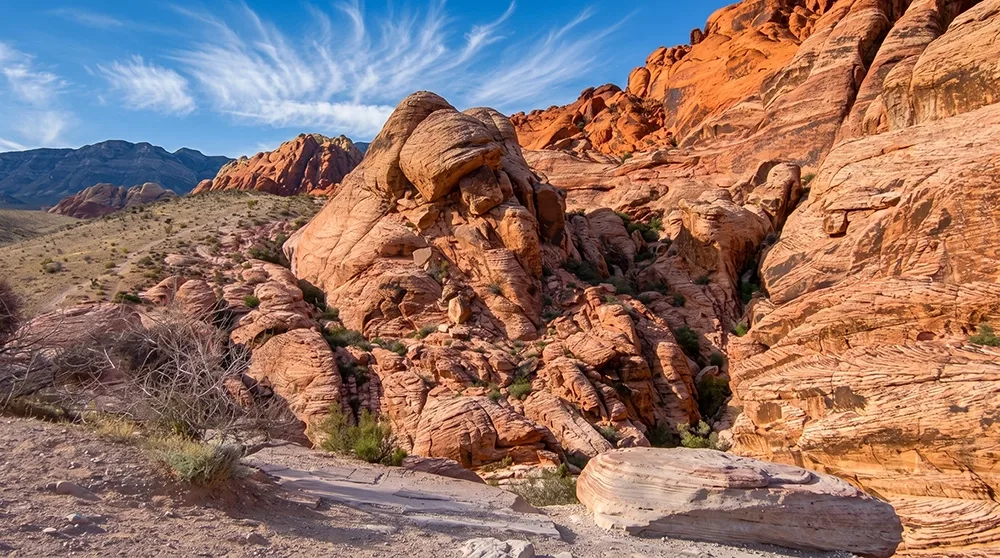
Three distinct slot canyons with serpentine walls make up the core of this hike, with Lake Mead visible along the canyon edge at points. The trail's name comes from actual white barn owls nesting in the canyon — look for whitewash, nests, and pellets on the rock walls, and avoid early spring visits to protect nesting season.
Best Time to Visit and Conditions
Late fall through spring is most comfortable; specifically avoid early spring to protect nesting owls.
Practical Advice for New Visitors
- Bring at least 2 liters of water per person.
- Wear sturdy shoes for scrambling sections.
- Download offline maps — there's no cell service in the canyon.
- Check the weather forecast given flash flood risk.
- Look for actual owl signs (whitewash, nests, pellets) on the canyon walls.
- Avoid early spring visits to protect nesting season.
- Not recommended for young kids given the real scrambling.
- Dogs may struggle with the scramble sections — consider leaving them home.
For hikers who want genuine slot canyon scrambling with an actual wildlife story behind the name, White Owl Canyon delivers real character in a manageable distance. Watch for the owls, respect their nesting season, and scramble carefully through the narrow walls.